Cold Slither: The G.I. Joe Episode That Weaponized Pop Culture Before Social Media Existed
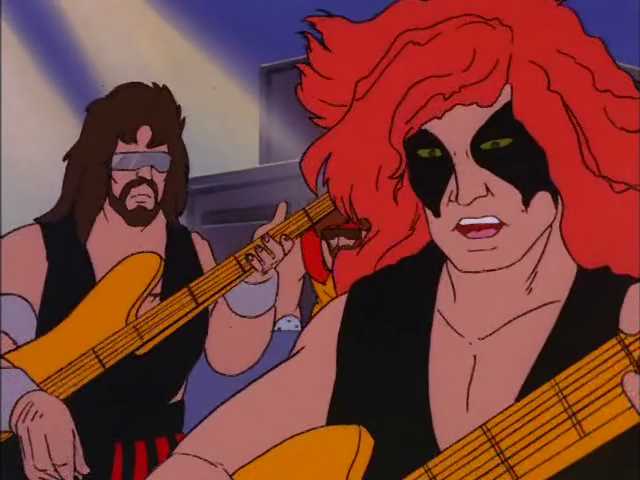
If you ever wanted proof that G.I. Joe occasionally snuck wildly adult ideas into a kids’ time slot, “Cold Slither” is Exhibit A. It aired December 2, 1985 (often listed as Sunbow Season 1, Episode 61, though some streaming catalogs label it differently). On its face, it’s the most “1985” premise imaginable: Zartan and the Dreadnoks become a heavy metal band. But the plot underneath the leather and pyrotechnics is what makes the episode hit so hard in 2026: Cobra uses music + TV as a delivery system for mass manipulation, aiming to bend public will through a “subliminal enslavement” program.
The plot is funny. The concept is not.
The episode’s backbone is straight-up psychological operations. In the official episode listings, Cobra is described as effectively regrouping after being “disbanded,” with Destro creating a subliminal enslavement program, then Zartan and the Dreadnoks forming Cold Slither to spread subliminal messages through music so Cobra can take control of minds at scale.
That’s why “Cold Slither” is timeless: it’s not really about rock music. It’s about distribution—getting a message into people’s heads by packaging it as entertainment.
Why it still feels relevant to adult Joe fans in 2026
As kids, most of us watched this and thought, “Cobra made a band. That rules.” As adults, the episode reads like a parable about how persuasion actually works.
1) Pop culture as a behavior-change engine
Cobra doesn’t pitch ideology like a lecture. They sell a vibe—rebellion, coolness, belonging—and then smuggle obedience inside it. That’s extremely modern. In 2026, “mind control” usually doesn’t look like hypnosis spirals; it looks like feeds, fandoms, short-form video loops, and identity-based communities where belief is reinforced socially and emotionally, not logically.
2) It accidentally captures the 1985 censorship panic… and why that panic never dies
The episode dropped the same year as the PMRC hearings and the broader “what is this music doing to kids?” moral panic—complete with calls for labeling and political pressure around youth culture. Decibel even points out how the episode was “quietly capturing the zeitgeist” around censorship fights and fears about sinister messaging in rock music.
Rewatching as an adult, you can see the two-sided anxiety:
- Adults fear media is rewiring the next generation.
- Youth fear adults want to control what they’re allowed to hear.
That tension is still everywhere in 2026—only the battleground has expanded from albums and MTV to algorithms and “what your kid is watching right now.”
3) The subliminal-message hook is exaggerated… but the broader point is legit
Real research tends to find that subliminal effects are often small and context-dependent, and long-term effects are not as simple as “one hidden command = instant brainwashing.” But that’s exactly why the episode remains useful: it dramatizes the ethical line—influence without informed consent.
In other words, “Cold Slither” isn’t a documentary about subliminals. It’s a cartoon screaming: If someone controls the channel, they can shape the crowd.
The adult read: Cobra isn’t selling music—they’re selling compliance
What makes “Cold Slither” endure for adult fans is how clearly it understands the mechanics of manipulation:
- Step 1: Build a spectacle people choose to watch.
- Step 2: Tie identity to the spectacle (“this is who you are”).
- Step 3: Use the trust/attention you earned to steer behavior.
That’s why the episode doesn’t feel dated—it feels like a prototype of modern persuasion, just with more spandex and fewer smartphones.
And maybe that’s the sharpest irony of all: the episode that looked like a joke in 1985 becomes, in 2026, one of the most “grown-up” episodes in the entire run.